
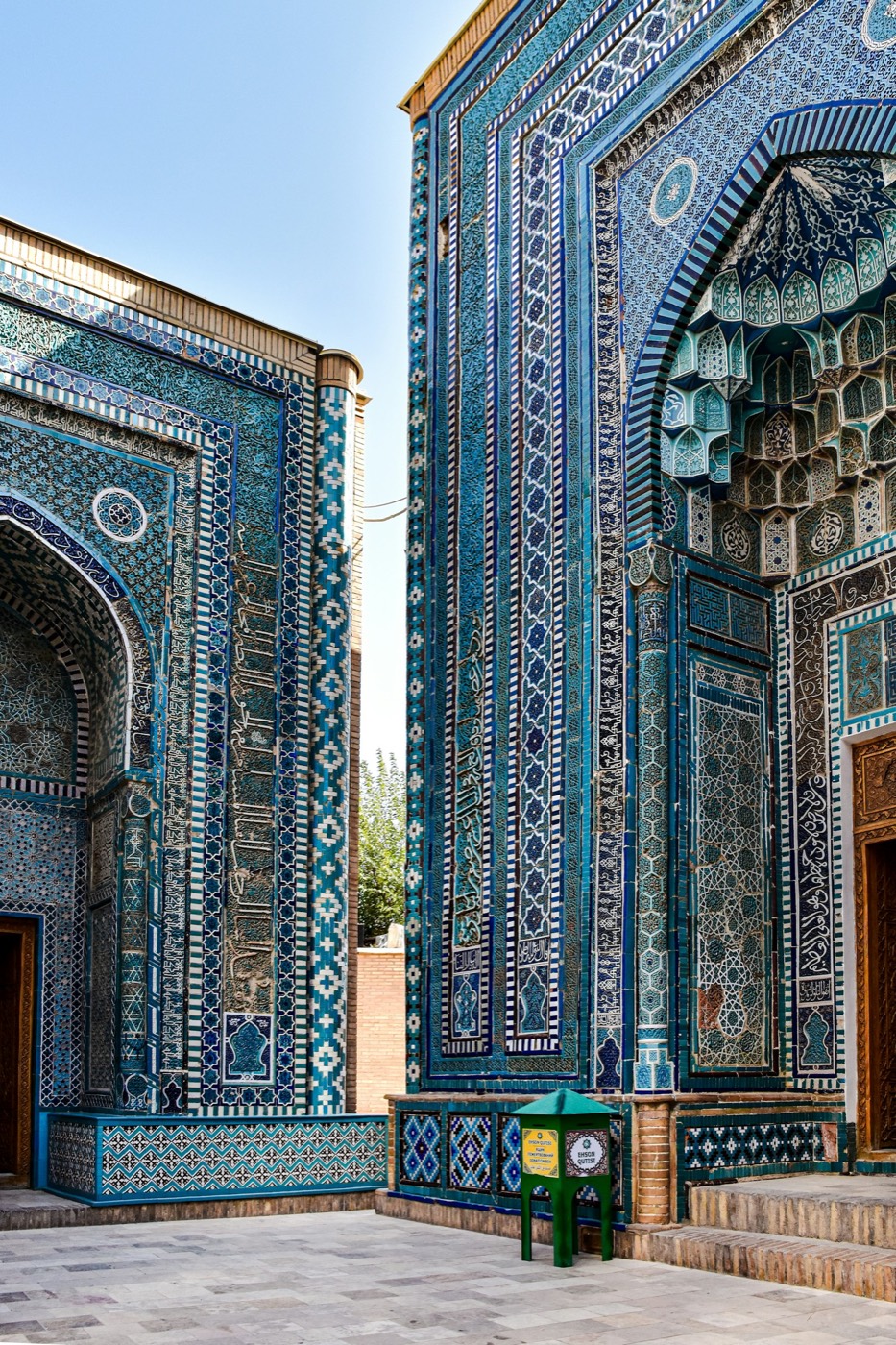
Tradition holds that if you count the staircase on the way up and again on the way down, and the two counts match, your sins are forgiven. Nobody has ever gotten the same number. That is, on some level, part of it.
At the top: twenty mausoleum portals lining a narrow alley up an Afrasiyab slope. Fourteenth-century Timurid tile at its highest peak. Arguably the finest surviving concentration of that particular blue anywhere on Earth.
- #samarkand
- #shahizinda
- #timurid
- #tilework
- #necropolis
Read the deep-dive
Samarkand: 2,750 years of history, etymology, and monuments
Alexander the Great called it Marakanda in 329 BCE. Timur made it his imperial capital in 1370. Ulugh Beg measured the year to within a minute here in 1437. The Registan is still the noblest public square in Islamic architecture — 12 sections tracing everything Samarkand is and has been.
Read the article →
Visit the place
Samarkand
The turquoise crossroads of empires
Destination overview →
More from the Journal
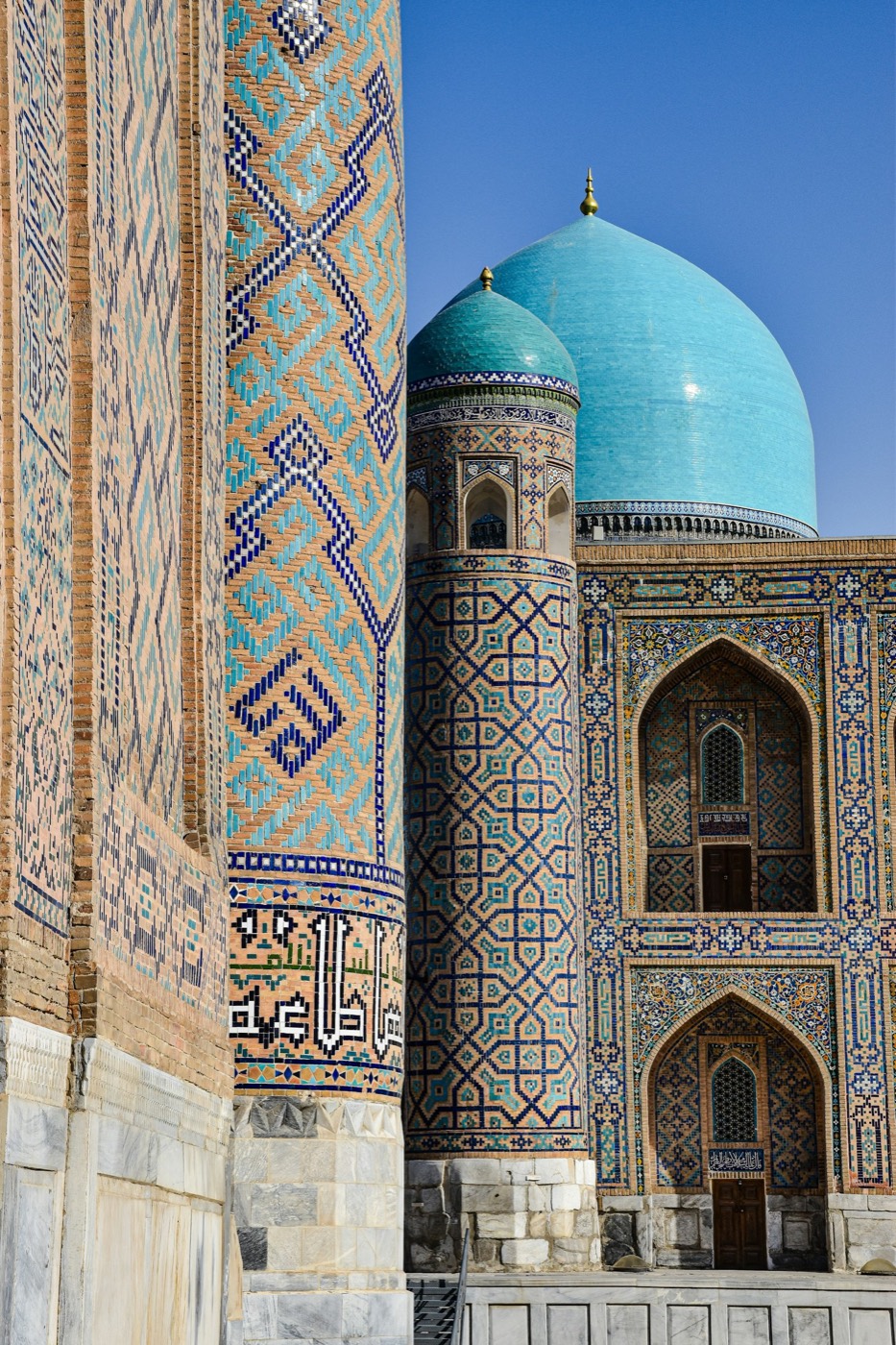
Three centuries of Timurid architecture converge on a single square. Lord Curzon called it the noblest public square in the world in 1889. It still holds.
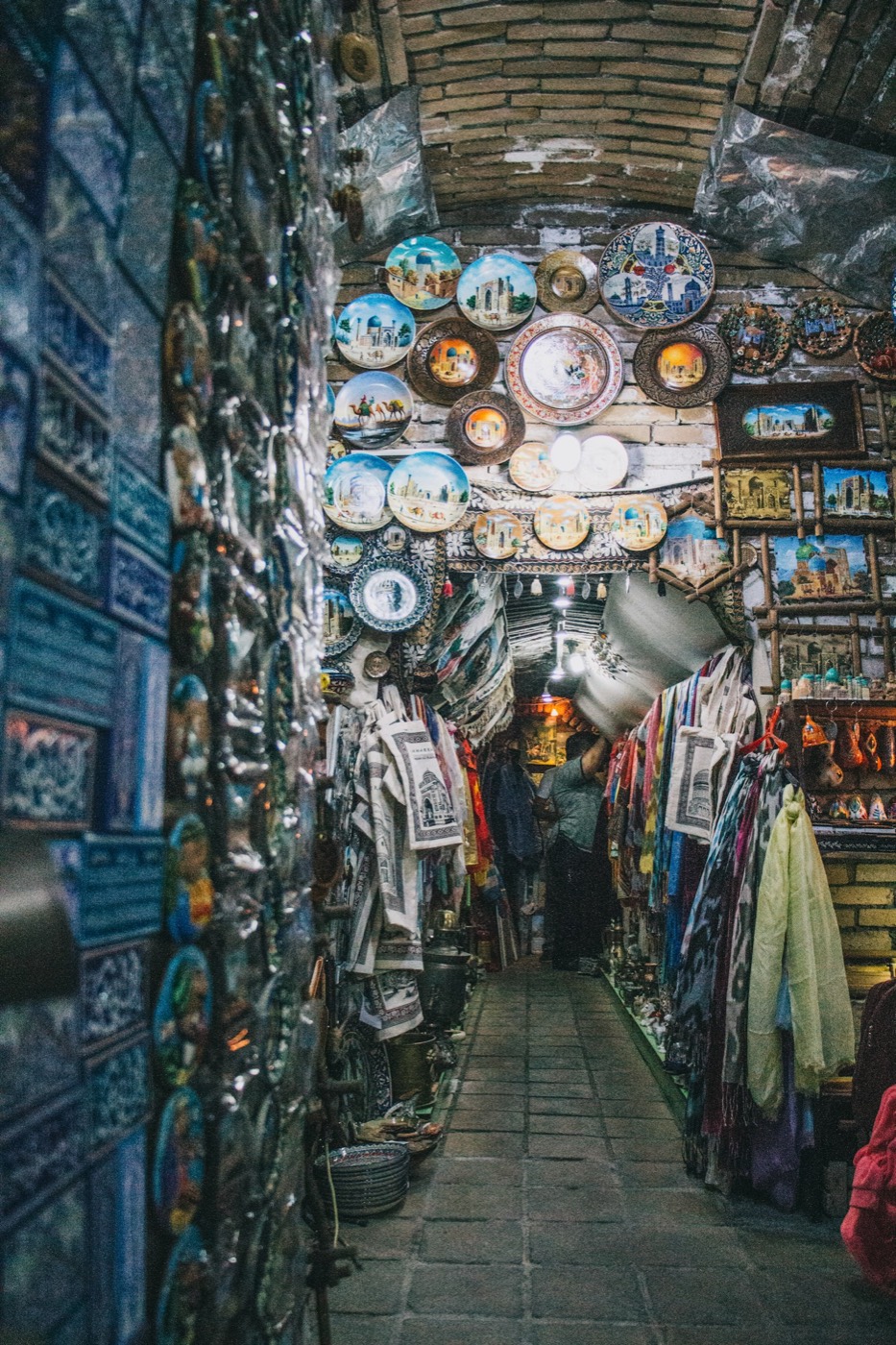
The last workshop in the world still making mulberry-fibre paper by the 8th-century Samarkand method.
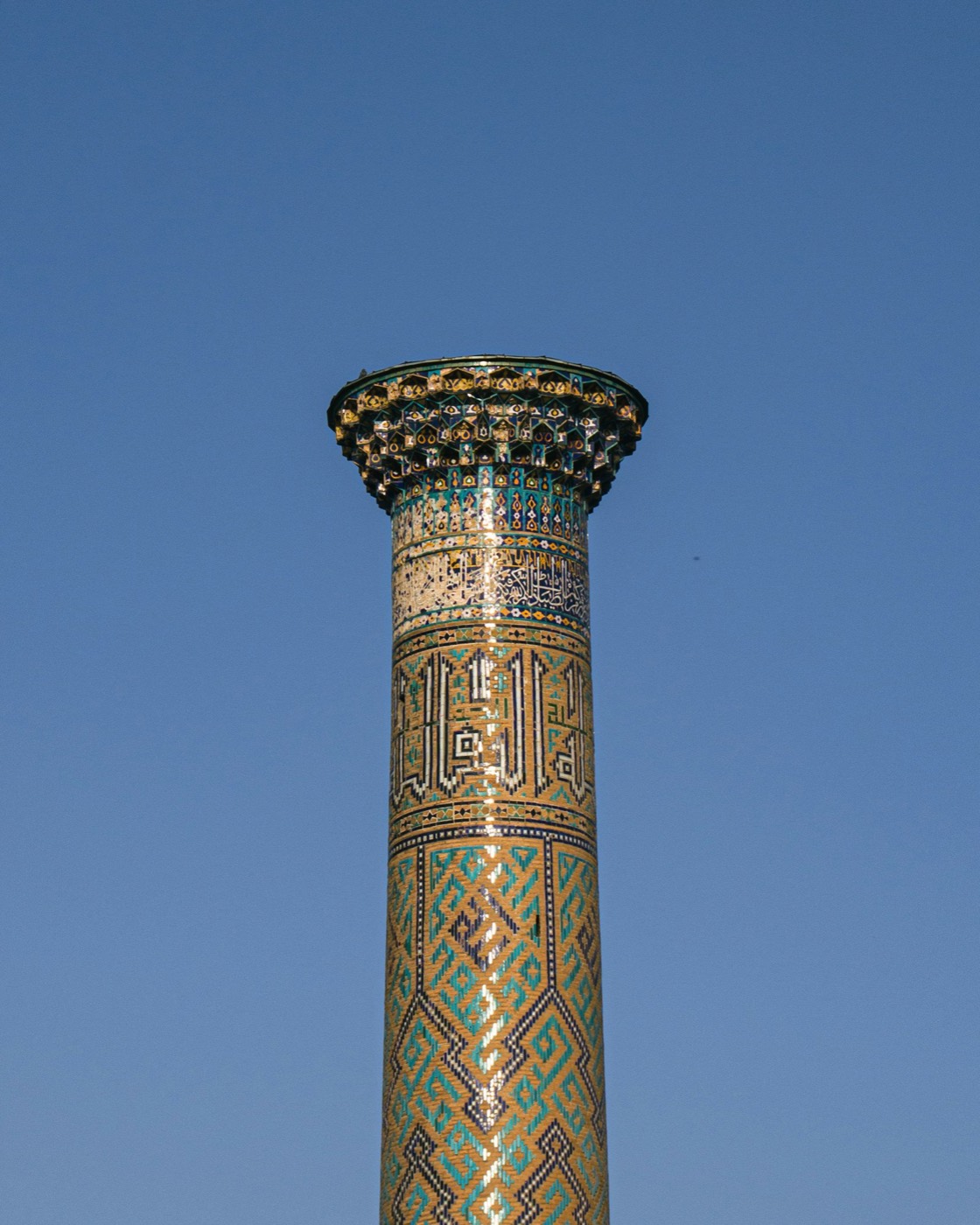
Muqarnas — the honeycomb geometry that turns a square wall into a circular dome. Fifteenth-century Timurid mathematics in blue and gold.