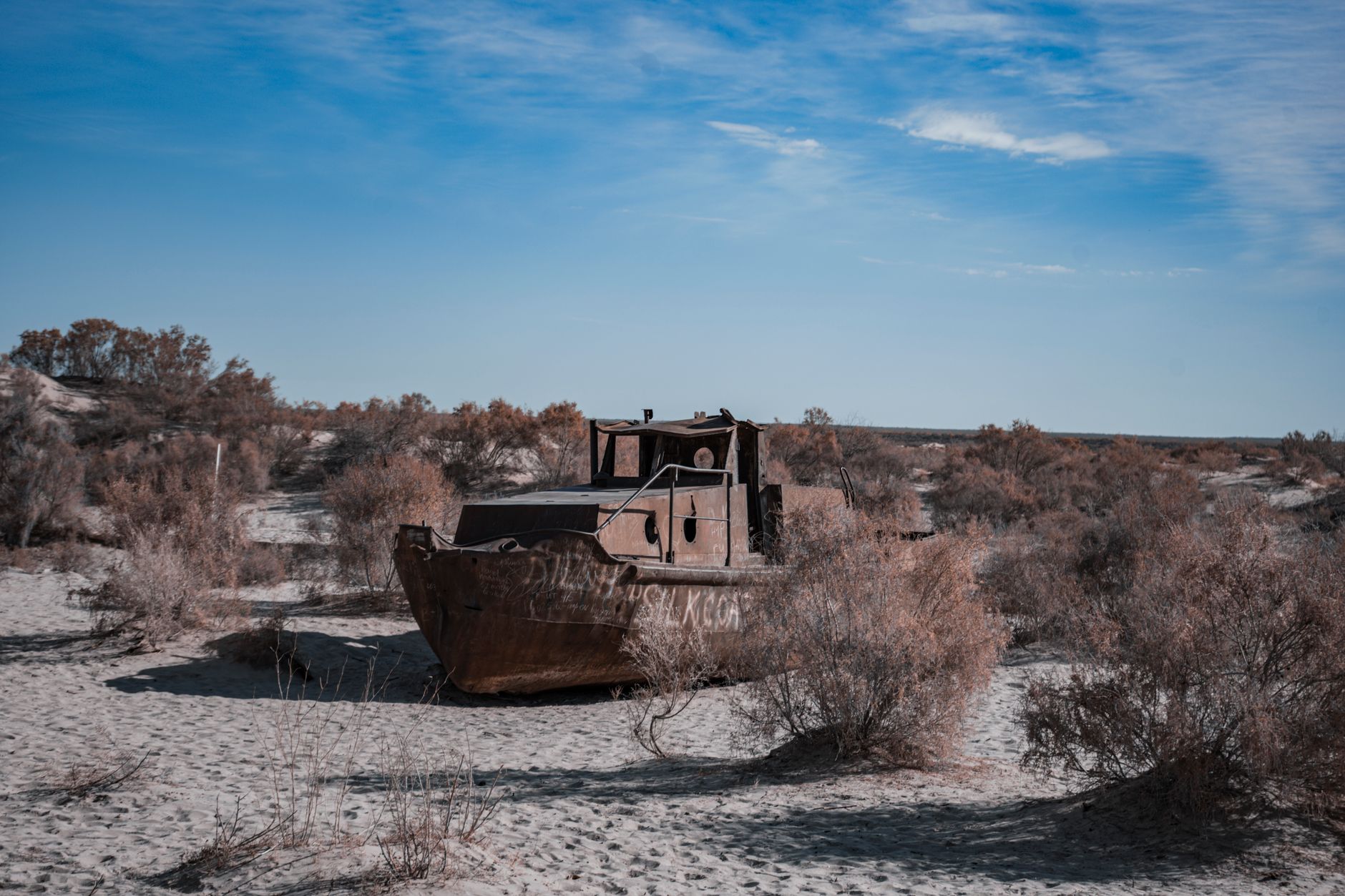
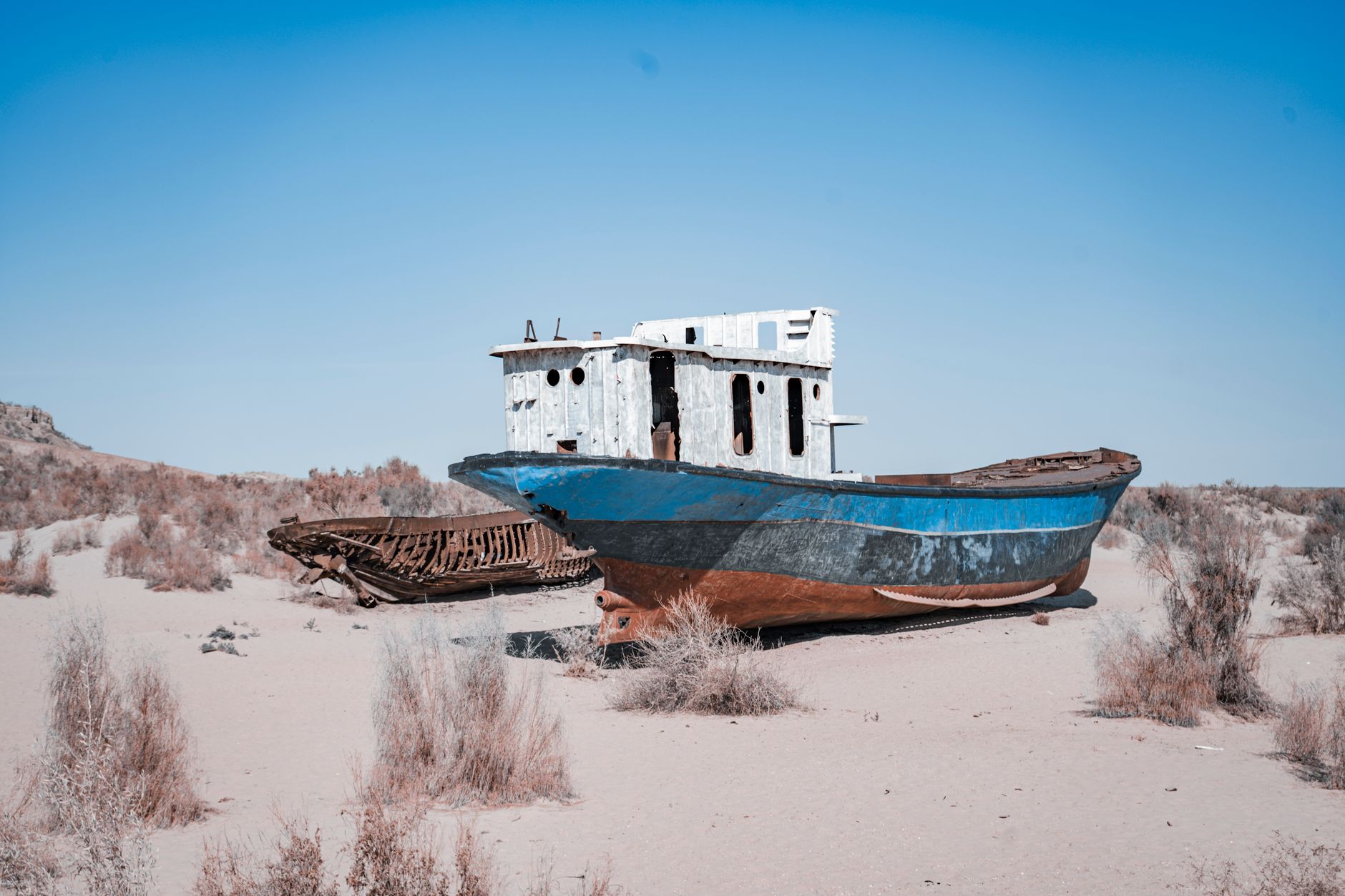
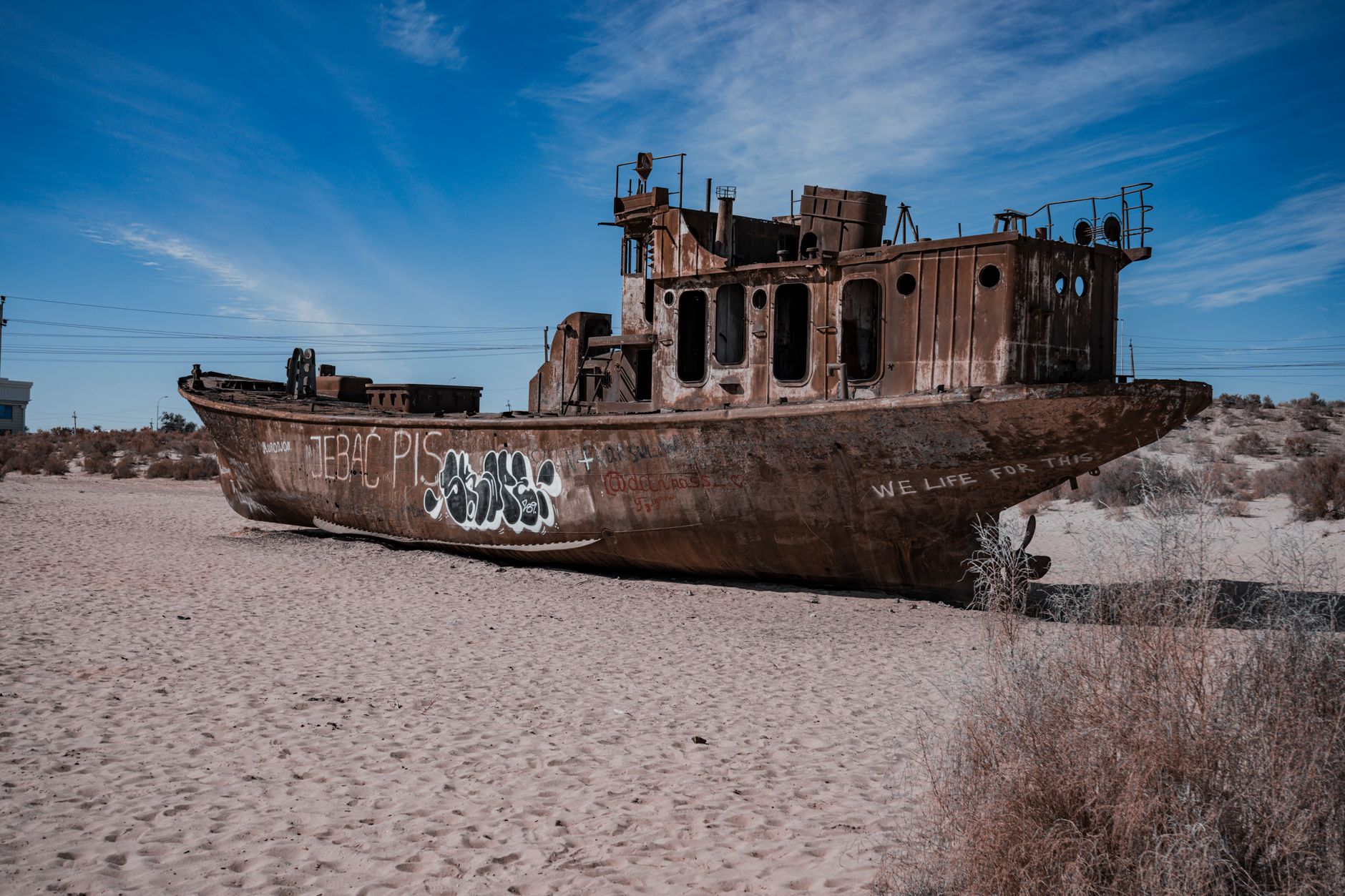
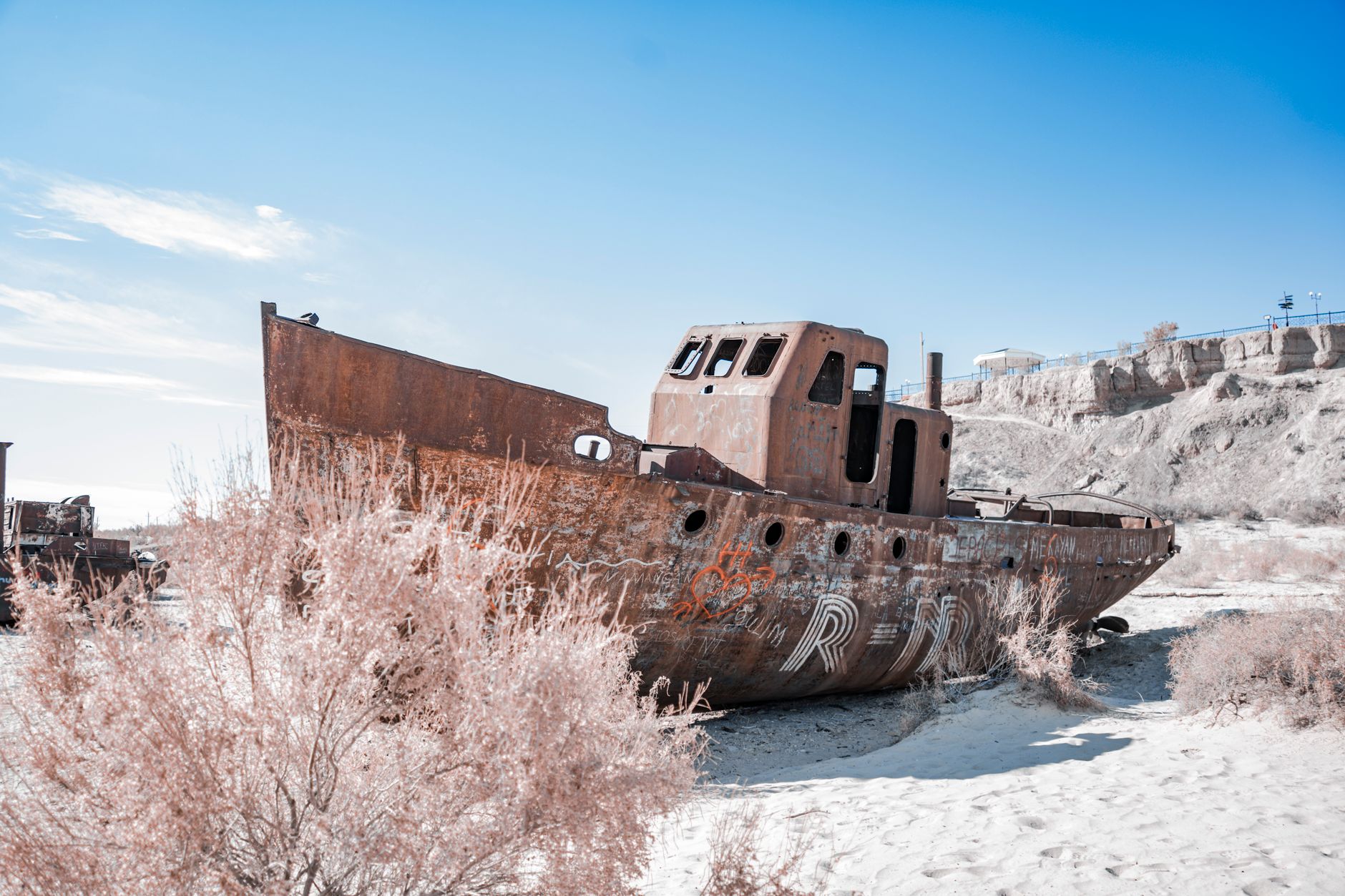
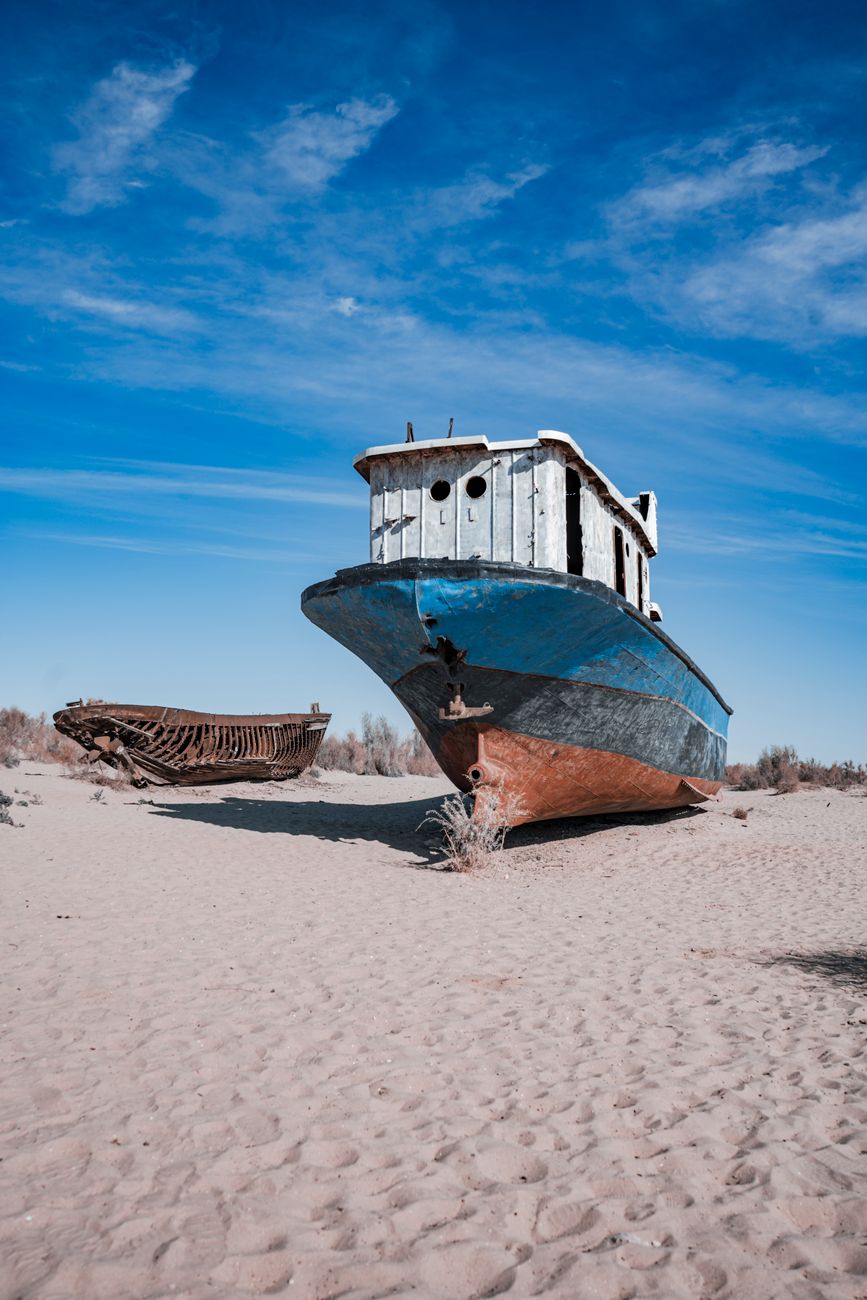
The Aral Sea was one of the world's largest inland lakes — 68,000 km² in 1960, larger than West Virginia. It supported a Soviet fishing industry of 40,000 workers, port towns at Muynak (Uzbek side) and Aralsk (Kazakh side), and a substantial commercial fleet.
In the 1950s–70s Soviet planners diverted both feeding rivers — the Amu Darya and Syr Darya — to irrigate cotton and rice fields across Uzbekistan and Kazakhstan. Water flow to the Aral dropped 80% within two decades. The sea began shrinking in the mid-1960s; by 1990 it had lost half its volume; by 2015 the eastern basin had entirely disappeared. Salinity rose from 10 g/L to over 100 g/L; the 20 native fish species died.
Muynak's population has fallen from around 40,000 at its 1960s peak to under 15,000. The town has become an accidental monument to the disappearing sea — its ship graveyard, museum, and shrinking dust-swept streets are one of the most visceral man-made-disaster tableaux visitors can walk through.