Skip to content

Khiva

The only fully preserved walled Silk Road city

Khiva·Ichan Kala, KhorezmUNESCO
About Khiva

The only fully preserved walled Silk Road city

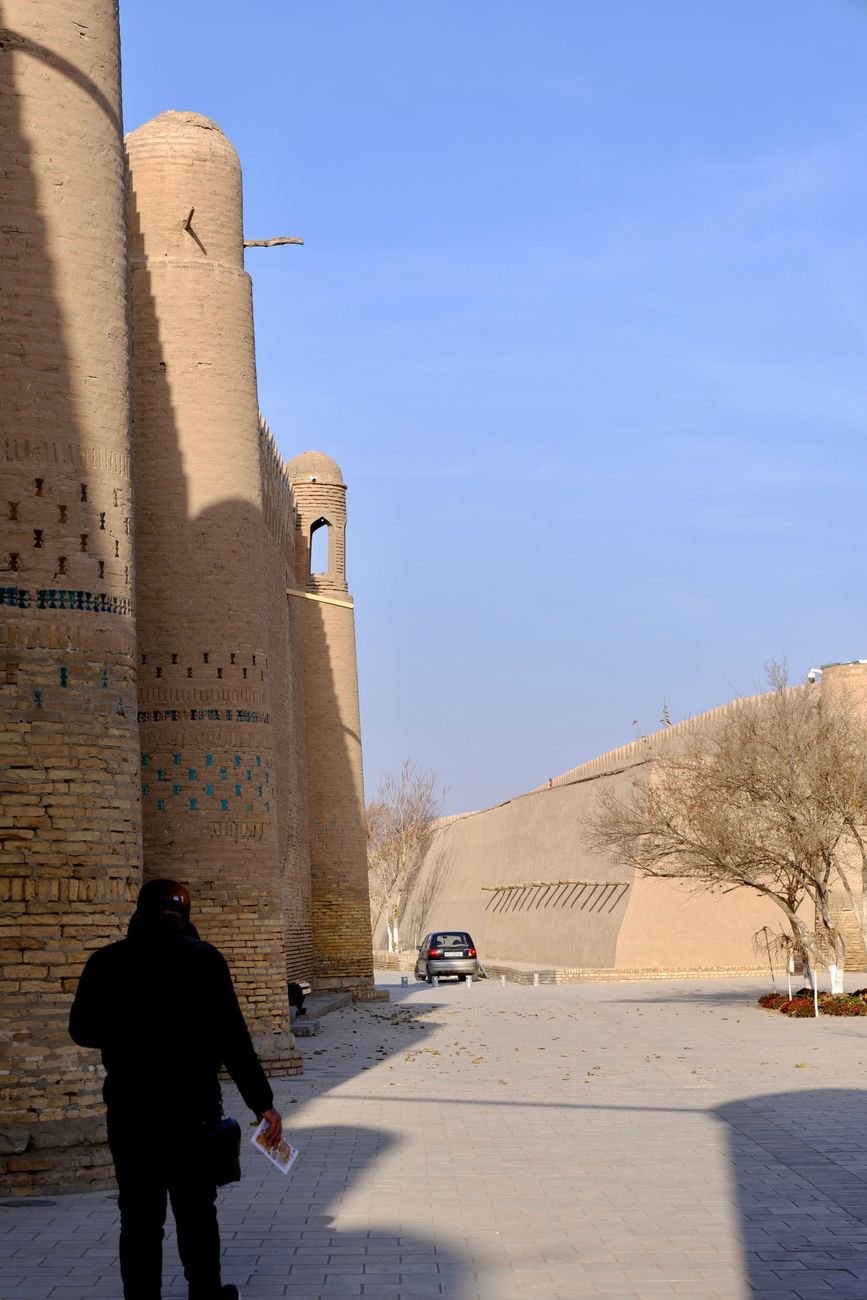
Ichan Kala, Khiva's inner town, is a compact grid of madrasas, palaces and tiled minarets ringed by 2.2 kilometres of 10-metre adobe walls. Because most of what stands here was built in the 18th and 19th centuries — and rigorously restored under UNESCO since 1990 — the ensemble feels curated, almost stagelike, especially when the muezzins sound at dusk and the streets empty of everyone but a few local cats.

Quick facts
Ichan Kala area
~26 hectares inside walls
Adobe walls
2.2 km, up to 10 m tall
Monuments inside
≈60
UNESCO inscription
Itchan Kala, 1990 (first in Central Asia)
From Urgench airport
35 min by taxi
Population (Khiva)
~90,000 (2024)
The story

A short history of Khiva

Khiva sits on the southern edge of the Amu Darya delta, in the ancient region of Khwarezm — one of the great Iranian civilisations Central Asia rarely gets credit for. Khwarezmian was written in an Aramaic-derived script until the 13th century; Al-Biruni (973–1048), one of the great polymaths of the Islamic Golden Age, was born nearby in Kath.

From the 17th to the 19th century Khiva was the capital of the Khivan Khanate — a slave-trading power notorious across the Russian frontier. Persian, Russian and Turkmen captives were sold in the Palvan-Darvoza market inside the walls; the Russian empire eventually used Khivan slaving as pretext for its 1873 conquest. The last Khan of Khiva was deposed in 1920 by the Bolsheviks.

Because most of Ichan Kala was rebuilt in the 18th–19th centuries under active Khivan patronage, the surviving fabric is unusually intact — 60 monuments inside 2.2 km of walls. UNESCO inscribed Itchan Kala in 1990, making it the first World Heritage Site in Central Asia.

Places to visit

What to see in Khiva

A curated list of the sights that matter, with a note on when to go and what most visitors miss.

Unfinished minaret

Kalta-Minor

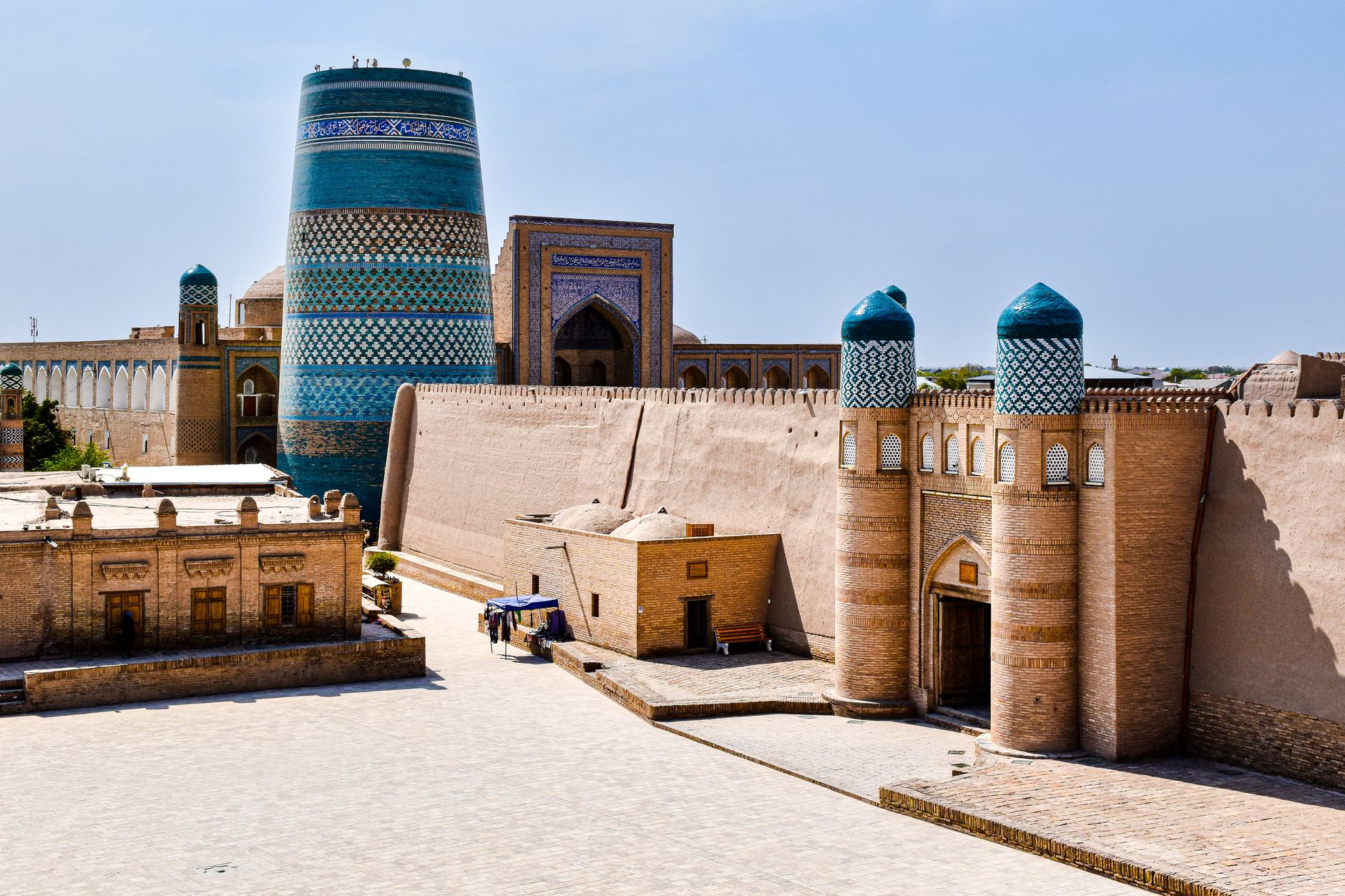
Khan Muhammad Amin began the Kalta-Minor in 1852 with the intention it would be the tallest minaret in the Islamic world. He died before it was finished. What survives is a 29-metre turquoise stump — impossibly beautiful, and probably Uzbekistan's most photographed single monument.

Historic mosque

Djuma Mosque

The Friday mosque holds 213 hand-carved wooden columns supporting a flat roof — an unusual pre-Islamic Khorezmian layout preserved through repeated rebuilds. Some columns date to the 10th century.

Tip · The columns are numbered and dated in situ; a slow half-hour visit reveals a millennium of Khorezmian craftsmanship.

Royal residence

Tosh-Hovli Palace

The 'Stone Palace' — a maze of harem courtyards, throne rooms and reception halls built 1830–38 with 260-plus columns and every wall tiled. The harem's iwans are open to visitors.

Citadel

Kunya-Ark Fortress

The Khivan citadel inside the north-west corner of Ichan Kala. Climb the western watchtower (Ak-Sheikh Bobo) for the single best view of Khiva's rooftops.

Tallest minaret

Islam Khodja Minaret

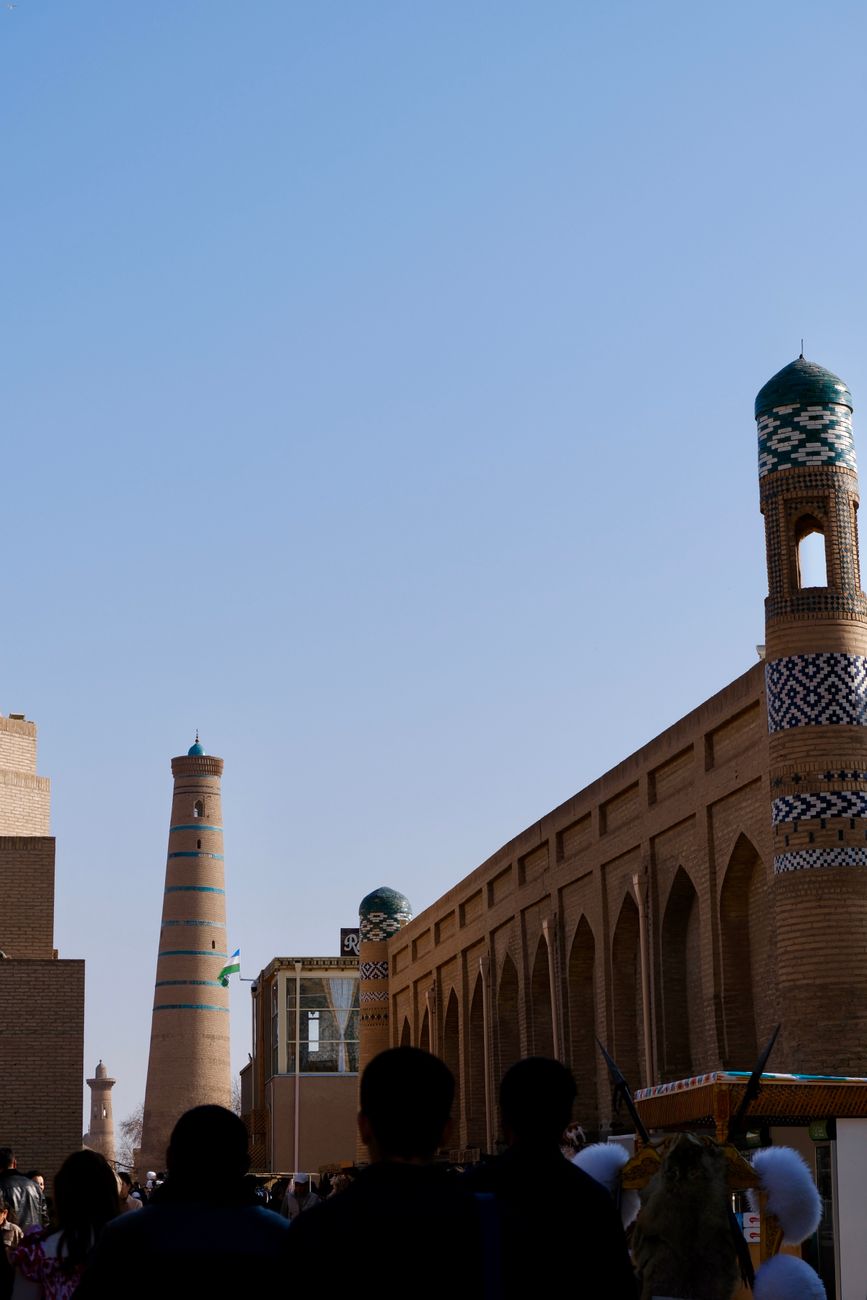
44.5 metres, built in 1908–10 — the tallest in Khiva. Climb the 118 steps inside for a working aerial view over Ichan Kala and out to the surrounding desert.

City gate + former slave market

Palvan-Darvoza (Strong Man's Gate)

The eastern gate — historically Khiva's slave market square. A grim history, quietly acknowledged today by a small explanatory panel.

Late-19th-c royal residence

Nurullabai Palace

Outside the walls of Ichan Kala; the last Khivan Khans' Russian-influenced palace with a rare glass-and-cast-iron ballroom modelled on St Petersburg. Frequently missed.

Day-trip archaeology

Ayaz-Kala fortress

Ninety minutes north — three interlocking Khorezmian fortresses (Toprak-Kala, Ayaz-Kala, Kyzyl-Kala) from the 4th–3rd centuries BCE, among the oldest fortified sites in Central Asia. No fences, no crowd.

Little-known facts

Facts about Khiva you won't find elsewhere

  1. Ichan Kala was the first UNESCO World Heritage Site inscribed in Central Asia (1990) — before any Kazakh, Tajik, Kyrgyz or Turkmen site.

  2. Khiva's Djuma Mosque contains 213 hand-carved wooden columns — some dating to the 10th century. It is one of the few surviving 'hypostyle' mosques with a flat wooden roof rather than a dome.

  3. The Kalta-Minor was planned to be the tallest minaret in the Islamic world. Its patron, Khan Muhammad Amin, was killed on campaign in 1855 before its completion, and the unfinished 29-metre stump became its own landmark.

  4. Al-Biruni — the great 10th–11th century polymath who calculated Earth's radius to within 0.5% of the modern value — was born in Kath, the ancient capital of Khwarezm just up the Amu Darya from Khiva.

  5. The Palvan-Darvoza gate was Central Asia's most notorious slave market well into the 1860s. Its abolition was a stated Russian objective in the 1873 conquest.

  6. Khiva sits at the western edge of the Kyzylkum desert — 'Red Sands' — one of the world's twelve largest deserts. Standing on the western walls at sunset, the light-and-dune combination is unmistakable.

Plan the visit

How to visit Khiva

Getting there

Fly Tashkent → Urgench (UGC, 1 h 20 min, multiple daily). Taxi from Urgench to Khiva: 35 min, ~$8. Alternative: overnight sleeper train from Tashkent to Urgench (~13 h). The Afrosiyob does not currently run to Khiva; extension is planned.

How long to stay

Two nights lets you see Ichan Kala inside the walls, walk the ramparts at both sunrise and sunset, and take a half-day trip to Ayaz-Kala. Add a night if you want to also see Nurullabai palace outside the walls.

When to visit

April–May and September–October are the sweet spots. Midsummer routinely hits 40 °C+ (Khorezm is desert). Winter is 0–5 °C and dry, and the empty streets can be spectacular — but book heating carefully as some old-town hotels are drafty.

Photo gallery

A curated set of 10 photographs of Khiva — architecture, streets, landscape and everyday life on the ground.

  • A person walks near the historic mudbrick walls of Khiva, Uzbekistan, bathed in sunlight© Rüveyda Akkaya
  • Historic minarets in Khiva, Uzbekistan, against a clear blue sky© Rüveyda Akkaya
  • Iconic Kalta Minor Minaret in Khiva, showcasing Islamic architecture in summer, Uzbekistan© AXP Photography
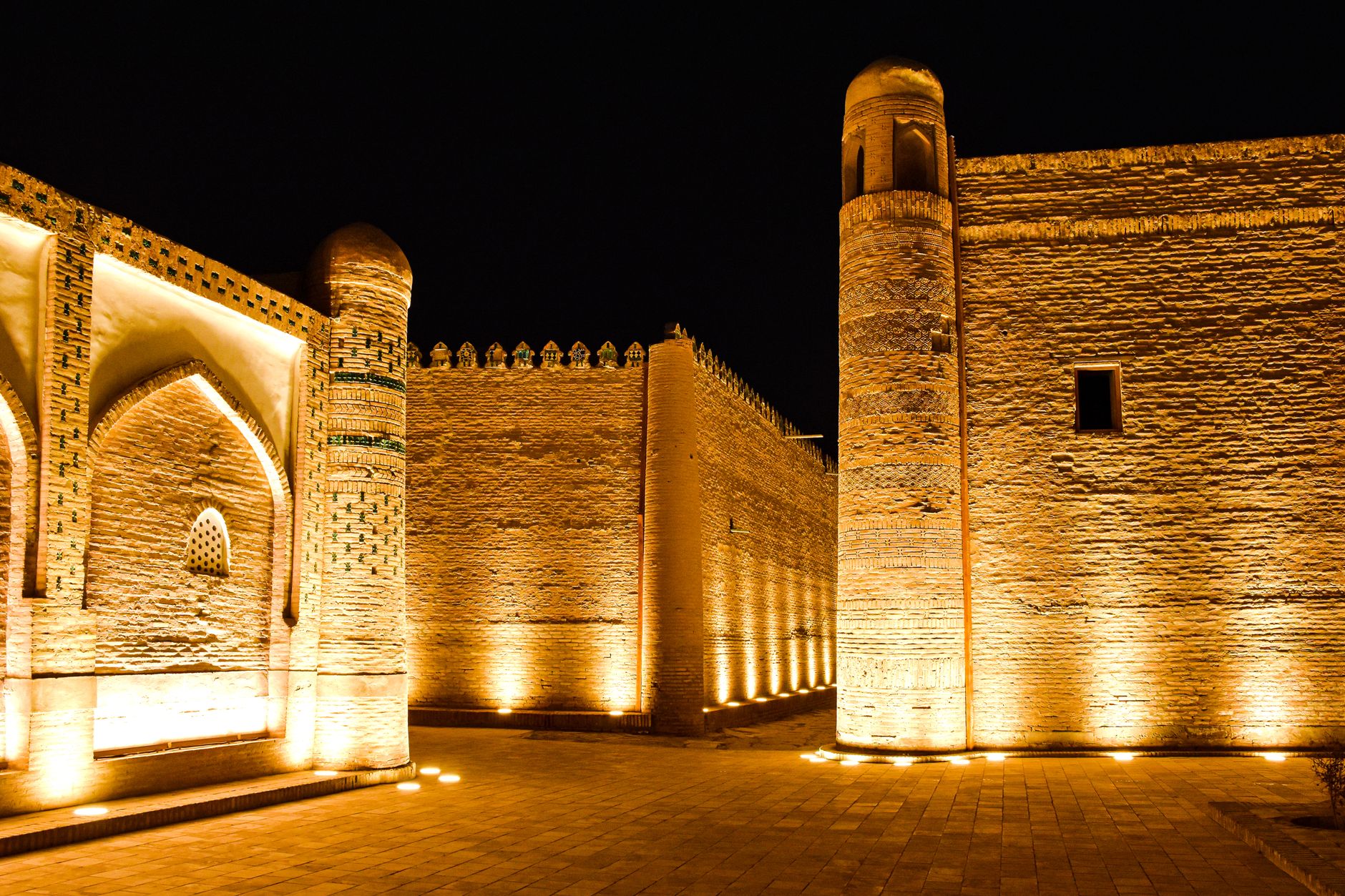
  • A beautifully lit historic wall in Khiva, Uzbekistan, showcasing Islamic architecture at night© AXP Photography
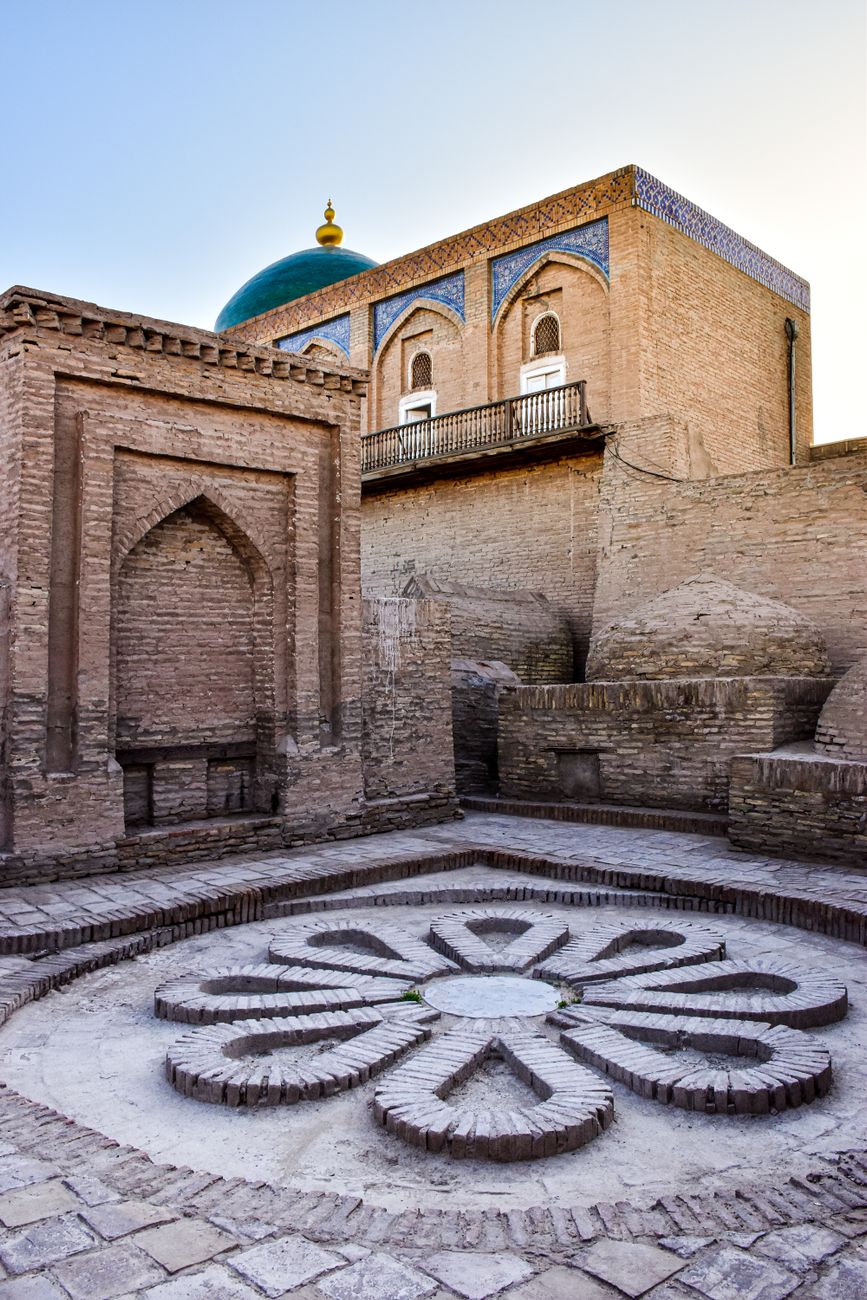
  • Ancient architecture of Khiva's old town courtyard with intricate brickwork and ornate designs, Uzbekistan© AXP Photography
  • Khiva's historic Itchan Kala during sunset with the iconic Kalta Minor Minaret, Uzbekistan© Sergey Guk
  • Bustling market street in Khiva with iconic Kalta Minor Minaret visible, capturing local culture, Uzbekistan© Rüveyda Akkaya
  • A woman in traditional attire walks near the historic Kalta Minor Minaret in Khiva, Uzbekistan© Elifinatlasi
  • A woman in red walks by the historic Kalta Minor Minaret in Khiva, Uzbekistan© Elifinatlasi
  • Exploring the historic streets of Khiva with the iconic Kalta Minor Minaret under a clear sky, Uzbekistan© Dmitriy Steinke
Ready to visit Khiva?

Have us design the trip around it

Tell us what you'd like to see and the dates you can travel — a local specialist will build a plan around Khiva and your interests.

Plan my trip